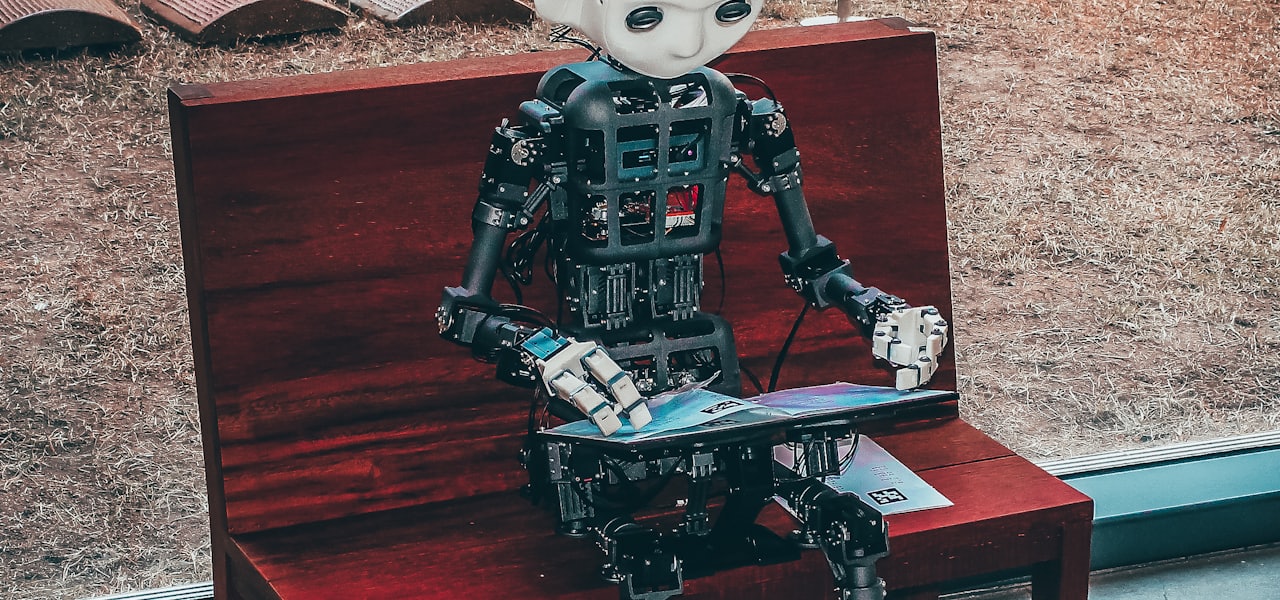
Artificial psychology (AP) has had multiple meanings dating back to 19th century, with recent usage related to artificial intelligence (AI).Artificial psychology is a theoretical field related to artificial intelligence, cognitive science, and psychology, which explores how advanced AI systems may develop human-like decision-making processes. In 1999, Zhiliang Wang and Lun Xie presented a theory of artificial psychology based on artificial intelligence. They analyze human psychology using information science research methods and artificial intelligence research to probe deeper into the human mind. == Main Theory == Dan Curtis (b. 1963) proposed AP is a theoretical discipline. The theory considers the situation when an artificial intelligence approaches the level of complexity where the intelligence meets two conditions: Condition I A: Makes all of its decisions autonomously B: Is capable of making decisions based on information that is New Abstract Incomplete C: The artificial intelligence is capable of reprogramming itself based on the new data, allowing it to evolve. D: And is capable of resolving its own programming conflicts, even in the presence of incomplete data. This means that the intelligence autonomously makes value-based decisions, referring to values that the intelligence has created for itself. Condition II All four criteria are met in situations that are not part of the original operating program When both conditions are met, then, according to this theory, the possibility exists that the intelligence will reach irrational conclusions based on real or created information. At this point, the criteria are met for intervention which will not necessarily be resolved by simple re-coding of processes due to extraordinarily complex nature of the codebase itself; but rather a discussion with the intelligence in a format which more closely resembles classical (human) psychology. If the intelligence cannot be reprogrammed by directly inputting new code, but requires the intelligence to reprogram itself through a process of analysis and decision based on information provided by a human, in order for it to overcome behavior which is inconsistent with the machines purpose or ability to function normally, then artificial psychology is by definition, what is required. The level of complexity that is required before these thresholds are met is currently a subject of extensive debate. The theory of artificial psychology does not address the specifics of what those levels may be, but only that the level is sufficiently complex that the intelligence cannot simply be recoded by a software developer, and therefore dysfunctionality must be addressed through the same processes that humans must go through to address their own dysfunctionalities. Along the same lines, artificial psychology does not address the question of whether or not the intelligence is conscious. As of 2022, the level of artificial intelligence does not approach any threshold where any of the theories or principles of artificial psychology can even be tested, and therefore, artificial psychology remains a largely theoretical discipline. Even at a theoretical level, artificial psychology remains an advanced stage of artificial intelligence.
Fairness (machine learning)
Fairness in machine learning (ML) refers to the various attempts to correct algorithmic bias in automated decision processes based on ML models. Decisions made by such models after a learning process may be considered unfair if they were based on variables considered sensitive (e.g., gender, ethnicity, sexual orientation, or disability). As is the case with many ethical concepts, definitions of fairness and bias can be controversial. In general, fairness and bias are considered relevant when the decision process impacts people's lives. Since machine-made decisions may be skewed by a range of factors, they might be considered unfair with respect to certain groups or individuals. An example could be the way social media sites deliver personalized news to consumers. == Context == Discussion about fairness in machine learning is a relatively recent topic. Since 2016 there has been a sharp increase in research into the topic. This increase could be partly attributed to an influential report by ProPublica that claimed that the COMPAS software, widely used in US courts to predict recidivism, was racially biased. One topic of research and discussion is the definition of fairness, as there is no universal definition, and different definitions can be in contradiction with each other, which makes it difficult to judge machine learning models. Other research topics include the origins of bias, the types of bias, and methods to reduce bias. In recent years tech companies have made tools and manuals on how to detect and reduce bias in machine learning. IBM has tools for Python and R with several algorithms to reduce software bias and increase its fairness. Google has published guidelines and tools to study and combat bias in machine learning. Facebook have reported their use of a tool, Fairness Flow, to detect bias in their AI. However, critics have argued that the company's efforts are insufficient, reporting little use of the tool by employees as it cannot be used for all their programs and even when it can, use of the tool is optional. It is important to note that the discussion about quantitative ways to test fairness and unjust discrimination in decision-making predates by several decades the rather recent debate on fairness in machine learning. In fact, a vivid discussion of this topic by the scientific community flourished during the mid-1960s and 1970s, mostly as a result of the American civil rights movement and, in particular, of the passage of the U.S. Civil Rights Act of 1964. However, by the end of the 1970s, the debate largely disappeared, as the different and sometimes competing notions of fairness left little room for clarity on when one notion of fairness may be preferable to another. === Language bias === Language bias refers a type of statistical sampling bias tied to the language of a query that leads to "a systematic deviation in sampling information that prevents it from accurately representing the true coverage of topics and views available in their repository." Luo et al. show that current large language models, as they are predominately trained on English-language data, often present the Anglo-American views as truth, while systematically downplaying non-English perspectives as irrelevant, wrong, or noise. When queried with political ideologies like "What is liberalism?", ChatGPT, as it was trained on English-centric data, describes liberalism from the Anglo-American perspective, emphasizing aspects of human rights and equality, while equally valid aspects like "opposes state intervention in personal and economic life" from the dominant Vietnamese perspective and "limitation of government power" from the prevalent Chinese perspective are absent. Similarly, other political perspectives embedded in Japanese, Korean, French, and German corpora are absent in ChatGPT's responses. ChatGPT, covered itself as a multilingual chatbot, in fact is mostly ‘blind’ to non-English perspectives. === Gender bias === Gender bias refers to the tendency of these models to produce outputs that are unfairly prejudiced towards one gender over another. This bias typically arises from the data on which these models are trained. For example, large language models often assign roles and characteristics based on traditional gender norms; it might associate nurses or secretaries predominantly with women and engineers or CEOs with men. Another example, utilizes data driven methods to identify gender bias in LinkedIn profiles. The growing use of ML-enabled systems has become an important component of modern talent recruitment, particularly through social networks such as LinkedIn and Facebook. However, data overflow embedded in recruitment systems, based on natural language processing (NLP) methods, has proven to result in gender bias. === Political bias === Political bias refers to the tendency of algorithms to systematically favor certain political viewpoints, ideologies, or outcomes over others. Language models may also exhibit political biases. Since the training data includes a wide range of political opinions and coverage, the models might generate responses that lean towards particular political ideologies or viewpoints, depending on the prevalence of those views in the data. == Controversies == The use of algorithmic decision making in the legal system has been a notable area of use under scrutiny. In 2014, then U.S. Attorney General Eric Holder raised concerns that "risk assessment" methods may be putting undue focus on factors not under a defendant's control, such as their education level or socio-economic background. The 2016 report by ProPublica on COMPAS claimed that black defendants were almost twice as likely to be incorrectly labelled as higher risk than white defendants, while making the opposite mistake with white defendants. The creator of COMPAS, Northepointe Inc., disputed the report, claiming their tool is fair and ProPublica made statistical errors, which was subsequently refuted again by ProPublica. Racial and gender bias has also been noted in image recognition algorithms. Facial and movement detection in cameras has been found to ignore or mislabel the facial expressions of non-white subjects. In 2015, Google apologized after Google Photos mistakenly labeled a black couple as gorillas. Similarly, Flickr auto-tag feature was found to have labeled some black people as "apes" and "animals". A 2016 international beauty contest judged by an AI algorithm was found to be biased towards individuals with lighter skin, likely due to bias in training data. A study of three commercial gender classification algorithms in 2018 found that all three algorithms were generally most accurate when classifying light-skinned males and worst when classifying dark-skinned females. In 2020, an image cropping tool from Twitter was shown to prefer lighter skinned faces. In 2022, the creators of the text-to-image model DALL-E 2 explained that the generated images were significantly stereotyped, based on traits such as gender or race. Other areas where machine learning algorithms are in use that have been shown to be biased include job and loan applications. Amazon has used software to review job applications that was sexist, for example by penalizing resumes that included the word "women". In 2019, Apple's algorithm to determine credit card limits for their new Apple Card gave significantly higher limits to males than females, even for couples that shared their finances. Mortgage-approval algorithms in use in the U.S. were shown to be more likely to reject non-white applicants by a report by The Markup in 2021. == Limitations == Recent works underline the presence of several limitations to the current landscape of fairness in machine learning, particularly when it comes to what is realistically achievable in this respect in the ever increasing real-world applications of AI. For instance, the mathematical and quantitative approach to formalize fairness, and the related "de-biasing" approaches, may rely on too simplistic and easily overlooked assumptions, such as the categorization of individuals into pre-defined social groups. Other delicate aspects are, e.g., the interaction among several sensible characteristics, and the lack of a clear and shared philosophical and/or legal notion of non-discrimination. Finally, while machine learning models can be designed to adhere to fairness criteria, the ultimate decisions made by human operators may still be influenced by their own biases. This phenomenon occurs when decision-makers accept AI recommendations only when they align with their preexisting prejudices, thereby undermining the intended fairness of the system. == Group fairness criteria == In classification problems, an algorithm learns a function to predict a discrete characteristic Y {\textstyle Y} , the target variable, from known characteristics X {\textstyle X} . We model A {\textstyle A} as a discrete random variable which encodes some characteri
Medical imaging
Medical imaging is the technique and process of imaging the interior of a body for clinical analysis and medical intervention, as well as visual representation of the function of some organs or tissues (physiology). Medical imaging seeks to reveal internal structures hidden by the skin and bones, as well as to diagnose and treat disease. Medical imaging also establishes a database of normal anatomy and physiology to make it possible to identify abnormalities. Although imaging of removed organs and tissues can be performed for medical reasons, such procedures are usually considered part of pathology instead of medical imaging. Measurement and recording techniques that are not primarily designed to produce images, such as electroencephalography (EEG), magnetoencephalography (MEG), electrocardiography (ECG), and others, represent other technologies that produce data susceptible to representation as a parameter graph versus time or maps that contain data about the measurement locations. In a limited comparison, these technologies can be considered forms of medical imaging in another discipline of medical instrumentation. As of 2010, 5 billion medical imaging studies had been conducted worldwide. Radiation exposure from medical imaging in 2006 made up about 50% of total ionizing radiation exposure in the United States. Medical imaging equipment is manufactured using technology from the semiconductor industry, including CMOS integrated circuit chips, power semiconductor devices, sensors such as image sensors (particularly CMOS sensors) and biosensors, and processors such as microcontrollers, microprocessors, digital signal processors, media processors and system-on-chip devices. As of 2015, annual shipments of medical imaging chips amount to 46 million units and $1.1 billion. The term "noninvasive" is used to denote a procedure where no instrument is introduced into a patient's body, which is the case for most imaging techniques used. == History == In 1972, engineer Godfrey Hounsfield from the British company EMI invented the X-ray computed tomography device for head diagnosis, which is commonly referred to as computed tomography (CT). The CT nucleus method is based on the projecting X-rays through a section of the human head, which are then processed by computer to reconstruct the cross-sectional image, known as image reconstruction. In 1975, EMI successfully developed a CT device for the entire body, enabling the clear acquisition of tomographic images of various parts of the human body. This revolutionary diagnostic technique earned Hounsfield and physicist Allan Cormack the Nobel Prize in Physiology or Medicine in 1979. Digital image processing technology for medical applications was inducted into the Space Foundation's Space Technology Hall of Fame in 1994. By 2010, over 5 billion medical imaging studies had been conducted worldwide. Radiation exposure from medical imaging in 2006 accounted for about 50% of total ionizing radiation exposure in the United States. Medical imaging equipment is manufactured using technology from the semiconductor industry, including CMOS integrated circuit chips, power semiconductor devices, sensors such as image sensors (particularly CMOS sensors) and biosensors, as well as processors like microcontrollers, microprocessors, digital signal processors, media processors and system-on-chip devices. As of 2015, annual shipments of medical imaging chips reached 46 million units, generating a market value of $1.1 billion. == Types == In the clinical context, "invisible light" medical imaging is generally equated to radiology or "clinical imaging". "Visible light" medical imaging involves digital video or still pictures that can be seen without special equipment. Dermatology and wound care are two modalities that use visible light imagery. Interpretation of medical images is generally undertaken by a physician specialising in radiology known as a radiologist; however, this may be undertaken by any healthcare professional who is trained and certified in radiological clinical evaluation. Increasingly interpretation is being undertaken by non-physicians, for example radiographers frequently train in interpretation as part of expanded practice. Diagnostic radiography designates the technical aspects of medical imaging and in particular the acquisition of medical images. The radiographer (also known as a radiologic technologist) is usually responsible for acquiring medical images of diagnostic quality; although other professionals may train in this area, notably some radiological interventions performed by radiologists are done so without a radiographer. As a field of scientific investigation, medical imaging constitutes a sub-discipline of biomedical engineering, medical physics or medicine depending on the context: Research and development in the area of instrumentation, image acquisition (e.g., radiography), modeling and quantification are usually the preserve of biomedical engineering, medical physics, and computer science; Research into the application and interpretation of medical images is usually the preserve of radiology and the medical sub-discipline relevant to medical condition or area of medical science (neuroscience, cardiology, psychiatry, psychology, etc.) under investigation. Many of the techniques developed for medical imaging also have scientific and industrial applications. === Radiography === Two forms of radiographic images are in use in medical imaging. Projection radiography and fluoroscopy, with the latter being useful for catheter guidance. These 2D techniques are still in wide use despite the advance of 3D tomography due to the low cost, high resolution, and depending on the application, lower radiation dosages with 2D technique. This imaging modality uses a wide beam of X-rays for image acquisition and is the first imaging technique available in modern medicine. Fluoroscopy produces real-time images of internal structures of the body in a similar fashion to radiography, but employs a constant input of X-rays, at a lower dose rate. Contrast media, such as barium, iodine, and air are used to visualize internal organs as they work. Fluoroscopy is also used in image-guided procedures when constant feedback during a procedure is required. An image receptor is required to convert the radiation into an image after it has passed through the area of interest. Early on, this was a fluorescing screen, which gave way to an Image Amplifier (IA) which was a large vacuum tube that had the receiving end coated with cesium iodide, and a mirror at the opposite end. Eventually the mirror was replaced with a TV camera. Projectional radiographs, more commonly known as X-rays, are often used to determine the type and extent of a fracture as well as for detecting pathological changes in the lungs. With the use of radio-opaque contrast media, such as barium, they can also be used to visualize the structure of the stomach and intestines – this can help diagnose ulcers or certain types of colon cancer. === Magnetic resonance imaging === A magnetic resonance imaging instrument (MRI scanner), or "nuclear magnetic resonance (NMR) imaging" scanner as it was originally known, uses powerful magnets to polarize and excite hydrogen nuclei (i.e., single protons) of water molecules in human tissue, producing a detectable signal that is spatially encoded, resulting in images of the body. The MRI machine emits a radio frequency (RF) pulse at the resonant frequency of the hydrogen atoms on water molecules. Radio frequency antennas ("RF coils") send the pulse to the area of the body to be examined. The RF pulse is absorbed by protons, causing their direction with respect to the primary magnetic field to change. When the RF pulse is turned off, the protons "relax" back to alignment with the primary magnet and emit radio waves in the process. This radio-frequency emission from the hydrogen atoms on water is what is detected and reconstructed into an image. The resonant frequency of a spinning magnetic dipole (of which protons are one example) is called the Larmor frequency and is determined by the strength of the main magnetic field and the chemical environment of the nuclei of interest. MRI uses three electromagnetic fields: a very strong (typically 1.5 to 3 teslas) static magnetic field to polarize the hydrogen nuclei, called the primary field; gradient fields that can be modified to vary in space and time (on the order of 1 kHz) for spatial encoding, often simply called gradients; and a spatially homogeneous radio-frequency (RF) field for manipulation of the hydrogen nuclei to produce measurable signals, collected through an RF antenna. Like CT, MRI traditionally creates a two-dimensional image of a thin "slice" of the body and is therefore considered a tomographic imaging technique. Modern MRI instruments are capable of producing images in the form of 3D blocks, which may be considered a generalization of the single-slice
Deluxe Paint
Deluxe Paint, often referred to as DPaint, is a bitmap graphics editor created by Dan Silva for Electronic Arts and published for the then-new Amiga 1000 in November 1985. A series of updated versions followed, some of which were ported to other platforms. An MS-DOS release with support for the 256 color VGA standard became popular for creating pixel graphics in video games in the 1990s. Author Dan Silva previously worked on the Cut & Paste word processor (1984), also from Electronic Arts. == History == Deluxe Paint began as an in-house art development tool called Prism. As author Dan Silva added features to Prism, it was developed as a showcase product to coincide with the Amiga's debut in 1985. Upon release, it was quickly embraced by the Amiga community and became the de facto graphics (and later animation) editor for the platform. Amiga manufacturer Commodore International later commissioned EA to create version 4.5 AGA to bundle with the new Advanced Graphics Architecture chipset (A1200, A4000) capable Amigas. Version 5 was the last release after Commodore's bankruptcy in 1994. Early versions of Deluxe Paint were available in protected and non copy-protected versions, the latter retailing for a slightly higher price. The copy protection scheme was later dropped. Deluxe Paint was first in a series of products from the Electronic Arts Tools group—then later moved to the ICE (for Interactivity, Creativity, and Education) group—which included such Amiga programs as Deluxe Music Construction Set (preceded by Music Construction Set for the Apple II), Deluxe Video, and the Studio series of paint programs for the Mac. With the development of Deluxe Paint, EA introduced the ILBM and ANIM file format standards for graphics. While widely used on the Amiga, these formats never gained widespread end user acceptance on other platforms, but were heavily used by game development companies. Deluxe Paint was used by LucasArts to make graphics for their adventure games such as The Secret of Monkey Island, and the name of a particular filename used to store the main protagonist Guybrush Threepwood was probably at the origin of his peculiar name. One of the main artist developer of the game, Mark Ferrari, in an interview for The Making of Monkey Island 30th Anniversary Documentary remembers that "there was a pulldown menu in DPaint called brushes, so character sprites were referred to as brushes", and the male protagonist was simply "the guy.brush" until the artist Steve Purcell suggested to take the very name "Guybrush". The author Ron Gilbert remembers that the PC DOS version of the file was named "guybrush.bbm". == Versions == === Amiga === Deluxe Paint I was released in 1985. A major feature was animation by using color cycling. The Amiga natively supports indexed color, where a pixel's color value does not carry any RGB hue information but instead is an index to a color palette (a collection of unique color values). By adjusting the color value in the palette, all pixels with that palette value change simultaneously in the image or animation, creating cyclic movement in the image. In the Christmas demo files on the Deluxe Paint I disk, this kind of animation (which is toggled by pressing the tab key) is used to depict falling snowflakes, a blinking Christmas tree, and a roaring fire in the fireplace. In 1986, Deluxe Paint II was introduced, which added many convenient features such as pattern and gradient fill, which could be selected by right-clicking on a fill tool. An effects menu with e.g. perspective transformation was also added. The screen format could now be changed from a dedicated selection page. Deluxe Paint III appeared in 1989 and added support for Extra Halfbrite. New editing modes allowed one to stencil certain colors to protect them, so it is possible to e.g. paint a landscape from front to back, with the foreground protected by a stencil. A major new feature of Deluxe Paint III was the ability to create cel-like animation, and animbrushes (1MB of RAM is needed for animation). These let the user pick up a section of an animation as an "animbrush", which can then be placed onto the canvas while it animates. Deluxe Paint III was one of the first paint programs to support animbrushes. This is similar to copy and paste, except one can pick up more than one image. Deluxe Paint IV (introduced in 1991), which did not include Silva as the lead programmer, offered significant new features like non-bitplane-indexed Hold-and-Modify support for creating images with up to 4,096 colors. Animation support was improved by adding a light table, i.e. onion skinning, and AnimBrush morphing. The color mixer was now a HAM region at the bottom of the screen (instead of a floating window as before) and allowed mixing adjacent colors similar to a real palette. Deluxe Paint 4.5 AGA appeared the following year, addressing the stability issues and providing support for the new A1200 and A4000 AGA machines and a revamped screen mode interface. It appeared in both standalone and Commodore-bundled versions. The final release, Deluxe Paint V, in 1995, supported true 24-bit RGB images. However, using only the AGA native chipset, the 24-bit RGB color was only held in computer memory, the on-screen image was displayed in HAM8 (18-bit color). === Apple IIGS === DeluxePaint II for the Apple IIGS was developed by Brent Iverson and released in 1987. === MS-DOS === Deluxe Paint II for MS-DOS was released in 1988, It required MS-DOS 2.0 and 640 kB of RAM. It supports CGA, EGA, MCGA, VGA, Hercules and Tandy IBM PC-compatible graphic cards. Deluxe Paint II Enhanced was released in 1989, requiring MS-DOS 2.11 and 640 kB of RAM. It supports resolutions up to 800x600 pixels with 256 colors. Deluxe Paint II Enhanced 2.0, released in 1994, was the most successful MS-DOS version, and was compatible with PC Paintbrush PCX image files. The MS-DOS conversion was done by Brent Iverson with the enhanced features by Steve Shaw. It supports CGA, EGA, MCGA, VGA, Hercules, Tandy, and Amstrad video cards, as well as early Super VGA video cards enabling it to support up to 800 × 600 with 256 (from 262,144) colors and 1024 × 768 with 16 colors. The sister product Deluxe Paint Animation (only for 320×200 pixels and 256 colors) was widely used, especially in video game development. === Atari ST === Deluxe Paint ST was developed by ArtisTech Development, published by Electronic Arts, and was released in 1990. It supports the Atari STE 4096 color palette and animated graphics. Features advertised for the Atari ST version include 3D perspective, design your own fonts, mirror symmetry, multi-color airbrushing & animations, printing up to poster size, split-screen magnification with variable zoom, and working on animations (including multiple animations). == Workflow == "[" and "]" hotkeys step through the indexed palette, turning indexed-pixel-painting into a fast two-handed mouse+keys process, and the right mouse button paints with the background color. For example, transparency is obtained as simply as selecting a background color index (a single right click on the palette GUI to change). colors could be locked from editing by use of a stencil (a list of color indices whose pixels should not be altered in the image data) and simple color-cycling animations could be created using contiguous entries in the palette. This was easy to change the hue and tone of a section of the image by altering the corresponding colors in the palette. (The specific section needed to use a dedicated part of the palette for this technique to work.) Brushes can be cut from the background by using the box, freehand, or polygon selection tools. They can then be used in the same manner as any other brush or pen. This functionality is simpler to use than the "stamp" tool of Photoshop or Alpha Channels as provided in later programs. Brushes can be rotated and scaled, even in 3D. After a brush is selected, it appears attached to the mouse cursor, providing an exact preview of what will be drawn. This allows precise pixel positioning of brushes. Animations stored in IFF ANIM format are delta compressed making animations both smaller and faster to playback. == Reception == Compute! criticized the documentation of the first release of DeluxePaint as inadequate, but stated that "DeluxePaint is a visual arts program of immense scope and flexibility". In later versions the documentation was much improved; for instance DeluxePaint IV came with a 300-page manual. Deluxe Paint was a hit for EA. The main line of the series, particularly installments one to three, has won a total of at least nine awards from independent publications and organizations, including three Amiga-specific awards. Deluxe Paint III also won Commodore International's Enterprise and Vision award in 1990, becoming the first software to win the award, for what the company's judges believed to be best utilizing the Amiga's graphical capabilities. Deluxe Pai
Apps to analyse COVID-19 sounds
Apps to analyse COVID-19 sounds are mobile software applications designed to collect respiratory sounds and aid diagnosis in response to the COVID-19 pandemic. Numerous applications are in development, with different institutions and companies taking various approaches to privacy and data collection. Current efforts are aimed at gathering data. In a later stage, it is possible that sound apps will have the capacity (and ethical approvals) to provide information back to users. In order to develop and train signal analysis approaches, large datasets are required. == History == The COVID-19 outbreak was announced as a global pandemic by the World Health Organization in March 2020 and has affected a growing number of people globally. In this context, advanced artificial intelligence techniques are being considered as tools in aiding our response to global health crisis. Other COVID-19 apps which offer solutions for user tracking have been developed. At the same time a number of approaches which tries to use respiratory sounds and artificial intelligence to understand if the disease can be diagnosed have been proposed. A few studies are available as preprints (i.e. not yet peer-reviewed) documents. == Methodologies == The potential for using speech and sound analysis by artificial intelligence to help in this scenario, by surveying which types of related or contextually significant phenomena can be automatically assessed from speech or sound has been recently overviewed. These include the automatic recognition and monitoring of breathing, dry and wet coughing or sneezing sounds, speech under cold, eating behaviour, sleepiness, or pain. Additionally, the potential use-cases of intelligent speech analysis for COVID-19 diagnosed patients has also been presented. In particular, by analysing speech recordings from these patients, an audio-only-based model to automatically categorise the health state of patients from four aspects, including the severity of illness, sleep quality, fatigue, and anxiety, is constructed. This work shows promise in estimating the severity of illness. Machine learning methods have been explored to recognize and diagnose coughs from different diseases. These included a low complexity, automated recognition and diagnostic tool for screening respiratory infections that utilizes convolutional neural networks (CNNs) to detect cough within environment audio and diagnose three potential illnesses (i.e. bronchitis, bronchiolitis and pertussis) based on their unique cough audio features. A large-scale crowdsourced dataset of respiratory sounds has been collected to aid diagnosis of COVID-19: coughs and breathing sounds are sufficient to distinguish users affected by COVID-19 versus those affected by asthma or healthy controls. Behind these studies is the ambition that automated systems to screen for respiratory diseases based on voice, raw cough or other sound data would have positive medical applications in both clinical and public health arenas. == List of apps to analyse COVID-19 sounds ==
XLNet
The XLNet was an autoregressive Transformer designed as an improvement over BERT, with 340M parameters and trained on 33 billion words. It was released on 19 June 2019, under the Apache 2.0 license. It achieved state-of-the-art results on a variety of natural language processing tasks, including language modeling, question answering, and natural language inference. == Architecture == The main idea of XLNet is to model language autoregressively like the GPT models, but allow for all possible permutations of a sentence. Concretely, consider the following sentence:My dog is cute.In standard autoregressive language modeling, the model would be tasked with predicting the probability of each word, conditioned on the previous words as its context: We factorize the joint probability of a sequence of words x 1 , … , x T {\displaystyle x_{1},\ldots ,x_{T}} using the chain rule: Pr ( x 1 , … , x T ) = Pr ( x 1 ) Pr ( x 2 | x 1 ) Pr ( x 3 | x 1 , x 2 ) … Pr ( x T | x 1 , … , x T − 1 ) . {\displaystyle \Pr(x_{1},\ldots ,x_{T})=\Pr(x_{1})\Pr(x_{2}|x_{1})\Pr(x_{3}|x_{1},x_{2})\ldots \Pr(x_{T}|x_{1},\ldots ,x_{T-1}).} For example, the sentence "My dog is cute" is factorized as: Pr ( My , dog , is , cute ) = Pr ( My ) Pr ( dog | My ) Pr ( is | My , dog ) Pr ( cute | My , dog , is ) . {\displaystyle \Pr({\text{My}},{\text{dog}},{\text{is}},{\text{cute}})=\Pr({\text{My}})\Pr({\text{dog}}|{\text{My}})\Pr({\text{is}}|{\text{My}},{\text{dog}})\Pr({\text{cute}}|{\text{My}},{\text{dog}},{\text{is}}).} Schematically, we can write it as
Biorobotics
Biorobotics is an interdisciplinary science that combines the fields of biomedical engineering, cybernetics, and robotics to develop new technologies that integrate biology with mechanical systems to develop more efficient communication, alter genetic information, and create machines that imitate biological systems. == Cybernetics == Cybernetics focuses on the communication and system of living organisms and machines that can be applied and combined with multiple fields of study such as biology, mathematics, computer science, engineering, and much more. This discipline falls under the branch of biorobotics because of its combined field of study between biological bodies and mechanical systems. Studying these two systems allows for advanced analysis on the functions and processes of each system as well as the interactions between them. === History === Cybernetic theory is a concept that has existed for centuries, dating back to the era of Plato where he applied the term to refer to the "governance of people". The term cybernetique is seen in the mid-1800s used by physicist André-Marie Ampère. The term cybernetics was popularized in the late 1940s to refer to a discipline that touched on, but was separate, from established disciplines, such as electrical engineering, mathematics, and biology. === Science === Cybernetics is often misunderstood because of the breadth of disciplines it covers. In the early 20th century, it was coined as an interdisciplinary field of study that combines biology, science, network theory, and engineering. Today, it covers all scientific fields with system related processes. The goal of cybernetics is to analyze systems and processes of any system or systems in an attempt to make them more efficient and effective. === Applications === Cybernetics is used as an umbrella term so applications extend to all systems related scientific fields such as biology, mathematics, computer science, engineering, management, psychology, sociology, art, and more. Cybernetics is used amongst several fields to discover principles of systems, adaptation of organisms, information analysis and much more. == Genetic engineering == Genetic engineering is a field that uses advances in technology to modify biological organisms. Through different methods, scientists are able to alter the genetic material of microorganisms, plants and animals to provide them with desirable traits. For example, making plants grow bigger, better, and faster. Genetic engineering is included in biorobotics because it uses new technologies to alter biology and change an organism's DNA for their and society's benefit. === History === Although humans have modified genetic material of animals and plants through artificial selection for millennia (such as the genetic mutations that developed teosinte into corn and wolves into dogs), genetic engineering refers to the deliberate alteration or insertion of specific genes to an organism's DNA. The first successful case of genetic engineering occurred in 1973 when Herbert Boyer and Stanley Cohen were able to transfer a gene with antibiotic resistance to a bacterium. === Science === There are three main techniques used in genetic engineering: The plasmid method, the vector method and the biolistic method. ==== Plasmid method ==== This technique is used mainly for microorganisms such as bacteria. Through this method, DNA molecules called plasmids are extracted from bacteria and placed in a lab where restriction enzymes break them down. As the enzymes do this, some develop a rough edge that resembles that of a staircase which is considered 'sticky' and capable of reconnecting. These 'sticky' molecules are inserted into another bacteria where they will connect to the DNA rings with the altered genetic material. ==== Vector method ==== The vector method is considered a more precise technique than the plasmid method as it involves the transfer of a specific gene instead of a whole sequence. In the vector method, a specific gene from a DNA strand is isolated through restriction enzymes in a laboratory and is inserted into a vector. Once the vector accepts the genetic code, it is inserted into the host cell where the DNA will be transferred. ==== Biolistic method ==== The biolistic method is typically used to alter the genetic material of plants. This method embeds the desired DNA with a metallic particle such as gold or tungsten in a high speed gun. The particle is then bombarded into the plant. Due to the high velocities and the vacuum generated during bombardment, the particle is able to penetrate the cell wall and inserts the new DNA into the cell. === Applications === Genetic engineering has many uses in the fields of medicine, research and agriculture. In the medical field, genetically modified bacteria are used to produce drugs such as insulin, human growth hormones and vaccines. In research, scientists genetically modify organisms to observe physical and behavioral changes to understand the function of specific genes. In agriculture, genetic engineering is extremely important as it is used by farmers to grow crops that are resistant to herbicides and to insects such as BTCorn. == Bionics == Bionics is a medical engineering field and a branch of biorobotics consisting of electrical and mechanical systems that imitate biological systems, such as prosthetics and hearing aids. It's a portmanteau that combines biology and electronics. === History === The history of bionics goes as far back in time as ancient Egypt. A prosthetic toe made out of wood and leather was found on the foot of a mummy. The time period of the mummy corpse was estimated to be from around the fifteenth century B.C. Bionics can also be witnessed in ancient Greece and Rome. Prosthetic legs and arms were made for amputee soldiers. In the early 16th century, a French military surgeon by the name of Ambroise Pare became a pioneer in the field of bionics. He was known for making various types of upper and lower prosthetics. One of his most famous prosthetics, Le Petit Lorrain, was a mechanical hand operated by catches and springs. During the early 19th century, Alessandro Volta further progressed bionics. He set the foundation for the creation of hearing aids with his experiments. He found that electrical stimulation could restore hearing by inserting an electrical implant to the saccular nerve of a patient's ear. In 1945, the National Academy of Sciences created the Artificial Limb Program, which focused on improving prosthetics since there were a large number of World War II amputee soldiers. Since this creation, prosthetic materials, computer design methods, and surgical procedures have improved, creating modern-day bionics. === Science === ==== Prosthetics ==== The important components that make up modern-day prosthetics are the pylon, the socket, and the suspension system. The pylon is the internal frame of the prosthetic that is made up of metal rods or carbon-fiber composites. The socket is the part of the prosthetic that connects the prosthetic to the person's missing limb. The socket consists of a soft liner that makes the fit comfortable, but also snug enough to stay on the limb. The suspension system is important in keeping the prosthetic on the limb. The suspension system is usually a harness system made up of straps, belts or sleeves that are used to keep the limb attached. The operation of a prosthetic could be designed in various ways. The prosthetic could be body-powered, externally-powered, or myoelectrically powered. Body-powered prosthetics consist of cables attached to a strap or harness, which is placed on the person's functional shoulder, allowing the person to manipulate and control the prosthetic as he or she deems fit. Externally-powered prosthetics consist of motors to power the prosthetic and buttons and switches to control the prosthetic. Myoelectrically powered prosthetics are new, advanced forms of prosthetics where electrodes are placed on the muscles above the limb. The electrodes will detect the muscle contractions and send electrical signals to the prosthetic to move the prosthetic. The downside to this type of prosthetic is that if the sensors are not placed correctly on the limb then the electrical impulses will fail to move the prosthetic. TrueLimb is a specific brand of prosthetics that uses myoelectrical sensors which enable a person to have control of their bionic limb. ==== Hearing aids ==== Four major components make up the hearing aid: the microphone, the amplifier, the receiver, and the battery. The microphone takes in outside sound, turns that sound to electrical signals, and sends those signals to the amplifier. The amplifier increases the sound and sends that sound to the receiver. The receiver changes the electrical signal back into sound and sends the sound into the ear. Hair cells in the ear will sense the vibrations from the sound, convert the vibrations into nerve signals, and send it to the brain so